• Skip to primary navigation
  • Skip to main content
  • Skip to footer
  • Latest News
  • Contact Us
  • Main Site
HeartCert CPR St. Cloud MN

HeartCert CPR St. Cloud MN

Affordable CPR Training near you

  • Individuals
    • CPR/AED/First Aid
    • CPR/AED
    • BLS
    • Bloodborne Pathogens
    • EKG Training
  • Organizations
  • About Us

CPR training

What’s the Difference Between CPR and First Aid Training?

6 days ago by tims

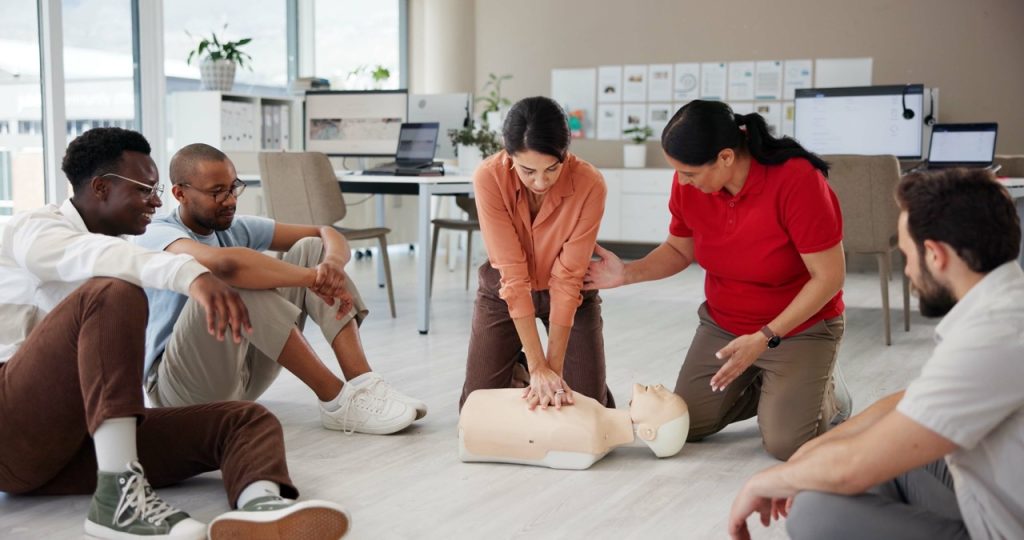
When you start looking into CPR and First Aid training, you’ll quickly notice that some courses cover one, while others include both. So how do you know which you actually need? Keep reading to learn what each training involves, the key differences between them, and how to choose the option that’s right for you.

red first aid kit beside a CPR mannequin in a training setting

What is CPR Training?

CPR stands for cardiopulmonary resuscitation. This life-saving procedure is used on an individual when they are unconscious, unresponsive, and not breathing. CPR 

CPR training teaches individuals how to respond effectively during an emergency. It includes identifying when to provide support, understanding when to administer CPR, and when it is not appropriate to do so. The training covers essential skills such as performing chest compressions, delivering rescue breaths, and using an Automated External Defibrillator (AED).

What is First Aid Training?

First aid training includes a variety of techniques for responding to injuries or medical emergencies. First aid training helps to equip individuals with the knowledge and skills necessary to provide immediate and at times life-saving assistance to someone experiencing a sudden injury. Typically, first aid training covers essential skills such as controlling bleeding, treating burns, assisting someone who is choking, and managing fractures.

Key Differences Between CPR and First Aid Training

While these certifications complement each other, they cover different skills and emergency situations. Here are some of the key differences you’ll find between the two:

CPR Training

First Aid Training

Primary focus is on life-threatening cardiac and breathing emergencies

Primary focus is on treating common injuries and sudden illnesses

Used when someone’s heart stops or they stop breathing

Used for injuries like cuts, burns, sprains or choking

Teaches chest compressions, rescue breaths and AED use

Teaches bleeding control, burn care, splinting and other injury response

Typically performed until emergency responders arrive

Provides care until professional medical help is needed

Often required for those in healthcare, childcare and safety roles

Commonly required for workplaces, schools and facilities that serve the public

Shorter, highly specific training

Broader training covering many scenarios


Who Should Take CPR and First Aid Training?

Anyone can benefit from regular CPR and First Aid training, but those who are especially inclined to keep up their certification include: 

  • Healthcare workers
  • Childcare providers
  • Workplace safety teams
  • General public
  • Employers and employees
  • Teachers and coaches
  • Parents and caregivers
  • Outdoor and industrial workers

Related: How Often Should I Renew My CPR Certification?


CPR and First Aid Training Program Options

Although many training programs combine both CPR and first aid, not all do. So it’s important to know what skills or certifications you want or need to obtain before signing up. Also, classes can be offered in a variety of formats; some are in-person at an on-site location, while others are online.

At HeartCert, our training combines CPR and first aid because we firmly believe that in the case of a true medical emergency, being informed and capable of providing care to those around you is imperative.

Our goal is to make the certification process as easy and accessible as possible, which is why we offer several different program options so you can choose what is most beneficial and convenient to you.

Choose from our available training options:

At-Home Course: Complete your certification virtually online, and we’ll deliver a CPR manikin directly to your door.

Private CPR Class: Start by completing the first part of your CPR training online from the comfort of your home. When you’re ready, you can schedule a time to finish the hands-on portion at one of our CPR learning station locations.

In-Person Group Classes: Sign up for a class at one of our locations to complete your training in a classroom setting with an experienced instructor.

Corporate Training: Our instructors will come to your business or organization to train your team in CPR and first aid.

Customized CPR Training that Fits Your Life and Schedule

Be Prepared for Emergencies With HeartCert Trainings

When an emergency strikes, you can’t predict whether CPR or first aid will be the critical skill needed. The best approach is to prepare yourself for both scenarios and hope you never need to use either. Comprehensive training ensures you’re ready for whatever comes your way.

At HeartCert, our lifesaving education trainings are designed to be accessible and flexible. No matter your schedule, preference and learning style, we have CPR training designed with you in mind. From in-person training at one of our physical locations to online certification for greater flexibility, you can choose which option is best for you.

Schedule your CPR and first aid training today. 

Find A CPR & First Aid Class


HeartCert is your trusted training partner for CPR, ACLS, PALS, EMR, First Aid, CNA, TMA, IV, EKG and more, throughout the United States.

Courses include CPR/AED/First Aid, Basic Life Support (BLS), Advanced Cardiac Life Support (ACLS), Pediatric Advanced Life Support (PALS), Certified Nursing Assistant training, IV training, EKG training, babysitter basics and more. Courses and certifications from both the American Heart Association and American Red Cross are available. We offer virtual courses and certifications, in all 50 states as well as in-person classes at our headquarters, HeartCert CPR Eagan and major cities in Iowa, Illinois, Michigan, Minnesota, Missouri, Mississippi, Nebraska, Pennsylvania, Texas and Wisconsin.
 

Filed Under: News Tagged With: American Heart Association, CPR, CPR Certification, CPR course, CPR training, First Aid, first aid course, first aid training, healthcare professionals, HeartCert, HeartCert CPR

Heart Attack Survival: Quick Steps to Take in the First Minutes

3 weeks ago by tims

Did you know that in the United States, someone has a heart attack every 40 seconds? Knowing the signs of a heart attack and what to do if you or someone around you were to experience one can be the difference between life and death. 

Most heart attack deaths happen within the first hour of occurring, which is why immediate action matters and can significantly improve survival rates. In this blog, we’ll cover how to recognize heart attack symptoms and the emergency steps to take in those critical first moments.

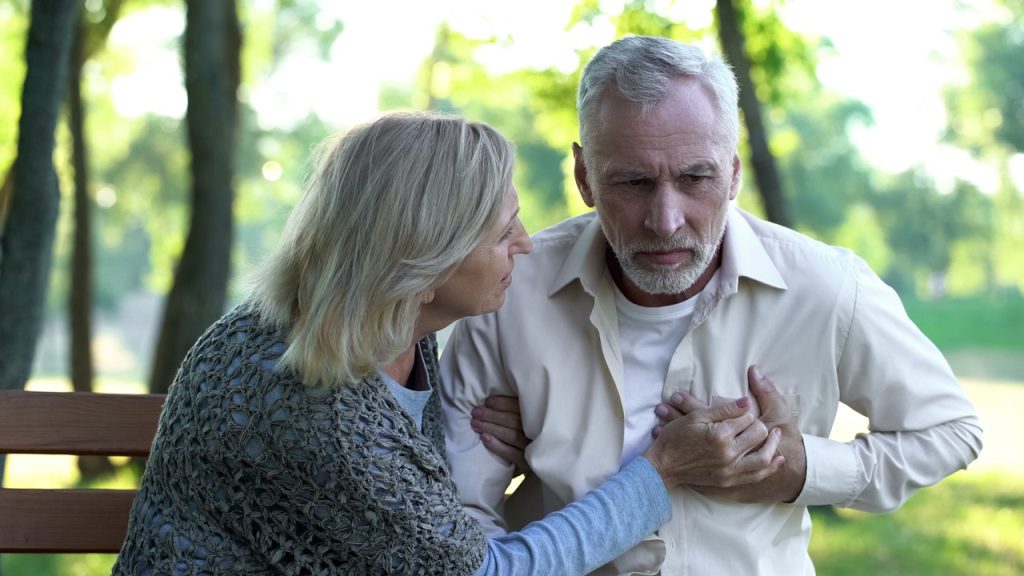
a woman sitting on a bench outdoors concerned about man holding his chest due to pain from heart attack

Recognize the Warning Signs Immediately

The most important thing you can do to protect yourself and those around you is knowing the signs of a heart attack. Acting promptly and not hesitating when you suspect a potential heart attack is critical to survival. 

Here are the main warning signs of a heart attack:

  • Chest pressure, squeezing, or discomfort
  • Pain radiating to arm, jaw, or back
  • Shortness of breath
  • Nausea, lightheadedness, cold sweat

Note that symptoms vary and can be subtle (especially for women).

Learn More: 10 Early Signs of a Heart Attack You Should Never Ignore

Quick Steps to Take in the First Minutes of a Heart Attack

Call 911 Right Away

If you or someone is experiencing signs of a heart attack the first thing to do is call 911. You may think you are fine to drive, but it’s one of the most dangerous things you can do if you are indeed having a heart attack. Having someone else drive may seem like an okay option, but being in the hands of EMS and medical professionals is the safest scenario because, in the event of a heart attack, monitoring, oxygen, and defibrillator use can be critical components of effective treatment.

In short, calling 911 first is the most important step.

Related: Be Prepared for Emergencies Until Help Arrives


Keep the Person Calm and Seated

Whether you are experiencing symptoms yourself or someone around you, once emergency services have been contacted, it’s imperative to remain calm. Staying still will lower the heart’s workload. Remain seated, rather than lying down; staying in a slightly upright position is considered best as it helps keep airways open and can reduce strain on the heart and lungs.

a concerned woman calling emergency services for husband in physical distress holding chest with heart attack symptoms

Give Aspirin

Emergency services recommended chewing 1 regular-strength aspirin if you are experiencing a heart attack. Doing so while waiting for professional medical attention can help slow clot formations.

Please note that aspirin should not be administered to individuals with allergies, bleeding disorders, or if told otherwise by their provider.

Women: Do you Know These Silent Heart Attack Symptoms?

Start CPR if the Person Becomes Unresponsive

If the person experiencing a heart attack becomes unresponsive, you should perform CPR. CPR helps keep blood flowing to vital organs until emergency responders arrive.

Let’s quickly review the difference between a heart attack and cardiac arrest.

A heart attack occurs when blood flow to the heart is blocked, but the heart may still be beating.

Cardiac arrest, on the other hand, happens when the heart suddenly stops beating altogether, causing the person to collapse and lose consciousness. When cardiac arrest occurs, CPR and an AED are needed right away to improve the chance of survival.

Learn more about the Difference Between Heart Attack and Sudden Cardiac Arrest

Learning how to respond quickly in these situations can make all the difference. CPR training equips you with the skills and confidence to take action when every second counts, helping you potentially save a life.

5 Reasons Why Everyone Should Know CPR


Use an AED if One Is Available

AEDs are designed for use by the general public; they provide easy-to-follow prompts that guide you step by step through the process. They are safe to use on adults and children over one year old, making them a critical tool for any emergency. Having an AED on-site is important for both businesses and households, as it can significantly improve a person’s chance of survival in a cardiac emergency.

Get an affordable AED today

What Not to Do During a Heart Attack

  • Do not delay calling 911.
  • Do not give food or drinks.
  • Do not drive the person to the hospital.
  • Do not encourage them to “walk it off” or wait symptoms out.

Why the First Minutes Matter

Acting quickly and decisively in those first minutes of a heart attack is critical for many reasons. The first being, the sooner you act, the faster you can receive medical attention and access to lifesaving treatments. EMS professionals can deliver early interventions before you reach a hospital, which can reduce heart damage and lead to higher survival rates.

As highlighted in an article from Baptist Health, survival rates for heart attack patients have improved dramatically over the past decades. In 1970, someone over 65 hospitalized for a heart attack had roughly a 60% chance of leaving the hospital alive. Today, that chance exceeds 90%, with even higher survival rates for younger patients.

Acting quickly gives patients the best chance for the same improved outcomes seen today.

Be Prepared Before an Emergency Happens

We often assume a medical emergency won’t happen to us or someone we care about, and unfortunately, many times it’s too late before we realize just how important preparedness is. Being ready and knowing what to do can make a real difference.

Take these steps today to be prepared:

  • Learn CPR and AED skills
  • Keep aspirin accessible
  • Know building AED locations
  • Encourage family and/or workplace safety planning

Strengthen Your Emergency Response Skills With HeartCert

Knowing what to do in the event of a crisis and having proper training on how to respond can drastically improve the survival rate for someone experiencing a heart attack, cardiac arrest or another medical emergency. Trained individuals respond faster and more confidently. HeartCert offers flexible, comprehensive training, including CPR, BLS, AED, and more, so you can gain the knowledge and critical skills needed to act effectively when it matters most.

Register for a class today and take the first step in strengthening your emergency response skills. 

Find A CPR Course

Sources:

https://med.stanford.edu/news/all-news/2025/06/heart-attack.html

https://baptisthealth.net/baptist-health-news/despite-steep-decline-in-fatal-heart-attacks-deaths-from-heart-disease-still-rising


HeartCert is your trusted training partner for CPR, ACLS, PALS, EMR, First Aid, CNA, TMA, IV, EKG and more, throughout the United States.

Courses include CPR/AED/First Aid, Basic Life Support (BLS), Advanced Cardiac Life Support (ACLS), Pediatric Advanced Life Support (PALS), Certified Nursing Assistant training, IV training, EKG training, babysitter basics and more. Courses and certifications from both the American Heart Association and American Red Cross are available. We offer virtual courses and certifications, in all 50 states as well as in-person classes at our headquarters, HeartCert CPR Eagan and major cities in Iowa, Illinois, Michigan, Minnesota, Missouri, Mississippi, Nebraska, Pennsylvania, Texas and Wisconsin.
 

Filed Under: News Tagged With: American Heart Association, CPR, CPR Certification, CPR course, CPR training, healthcare professionals, heart attack

Practical Ways to Practice CPR Skills at Home

1 month ago by tims

CPR is one of those skills you hope you never have to use, but if you do, you want to feel confident and ready. One of the challenges is that even with an active certification, CPR skills fade quickly without practice. And many people will feel less confident the longer it’s been since their certification.

The good news is that you can reinforce good CPR habits right at home. A few simple practice methods can help you keep your technique fresh between recertifications and respond quickly in a real emergency. Here are some of the best ways to stay prepared.

guide to emergency cpr steps displayed on a smart phone screen

Ways to Practice CPR at Home

Practice Chest Compressions

One of the most foundational and effective CPR techniques to practice and stay familiar with is proper chest compressions. There are a few ways you can work this into at-home CPR practice.

Use a Pillow or Firm Cushion

Using a pillow or a cushion can give you the ability to practice the critical component of CPR, chest compressions, by simulating proper hand placement and body positioning.

Practice Compression Rhythm Using Music or a Metronome

While practicing chest compressions, use songs that are around 100–120 BPM (“Stayin’ Alive” or “I Will Survive“) to reinforce the correct compression pace. 

hands positioned for CPR compressions on a black background

Watch CPR Training Videos From Reputable Sources

Another easy way to stay prepared to assist in a cardiac arrest is to regularly watch CPR training videos from legitimate sources. Some of the leading organizations, such as the American Heart Association and the American Red Cross, have an abundance of resources available on their YouTube channels. 

Here are a few worth checking out:

American Red Cross YouTube Channel

American Heart Association YouTube Channel

HeartCert CPR Training YouTube Channel

These trustworthy training videos are an excellent way to instill the core concepts of CPR and first aid, as visual learning and repetition help individuals build retention.

Refresh Your CPR Steps With Study Materials

When you take an in-person or online CPR training, you get a lot of information shared with you at a fast pace. One of the smartest things to do is to take that information and make it into easy-to-digest materials so you can regularly review and stay sharp on best CPR practices.

Some ways to do this:

  • Create your own or print free resources to study such as flashcards and checklists.
  • Review the key steps: assess the scene, call 911, start compressions, AED use.
  • Use this step-by-step checklist from the American Red Cross on How to Perform CPR – Adult CPR Steps to create your own checklist or flashcards.
  • You can also review the official HeartSaver Adult CPR and AED Skills Testing Checklist so that you can practice the assessment given during an actual CPR certification class.

Practice With a CPR Manikin

CPR manikins are surprisingly affordable; you can actually get your own in a CPR Anytime kit from the American Heart Association for under $50. But you don’t have to let that limit you from practicing; you can build your own simple DIY style CPR manikin using household items such as towels, pool noodles, and old clothing. Practicing with any manikin, whether it’s purchased or constructed with materials around your home, lets you practice placement and hand positioning. Just keep in mind that a DIY manikin does not replicate true compression depth but can improve technique familiarity.

Order a CPR Anytime Kit

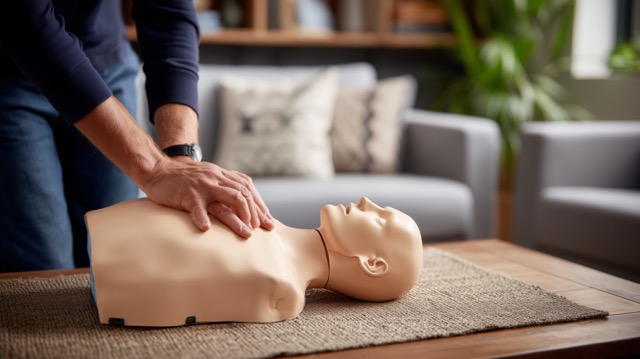
CPR training manikin sitting on a coffee table in the living room of a home while a person practices chest compressions

Use CPR Training Apps

With modern technology, there are ample opportunities to practice your CPR and first aid skills. Apps can help you plan for emergency scenarios, practice AED prompts and more. Regular practice is a great way to reinforce quick decision-making under pressure. 

Here are a few options worth checking out:

https://apps.apple.com/us/app/first-aid-american-red-cross/id529160691 

https://apps.apple.com/us/app/cpr-tempo/id525695057 

Role-Play Realistic Emergency Scenarios

You can practice all of these techniques on your own at home to build your CPR skills, but one of the best ways to keep your skills sharp is to practice with someone else. When you role-play emergency scenarios with another person, such as families, friends or roommates, it makes it that much more realistic. You can really practice how you’d react, and critical steps like checking responsiveness, calling for help, and starting compressions.

Review AED Procedures

Although many individuals do not have an AED in their home, it’s another critical component to have a clear understanding of and practice so you are equipped to operate the device properly in an emergency situation. Regularly reviewing AED procedures, such as electrode placement and videos, can help you recognize and practice following simulated AED instructions.

Common Questions About Practicing CPR at Home

Can I fully learn CPR at home?

Yes, with a qualified and comprehensive online CPR training course, such as HeartCert’s at-Home virtual CPR certification. 

Is practicing CPR on a pillow accurate?

Practicing CPR on a pillow is not as accurate as practicing on a manikin, but it can still help you with your technique, rhythm and confidence.

How often should I refresh my CPR skills?

Practice your CPR skills at home regularly and renew your CPR certification every 2 years.

When At-Home CPR Practice Isn’t Enough

These at-home practices are great for building muscle memory, confidence and keeping your head ready and your skills sharp in the event of a cardiac emergency. However, they do not replace the need for regularly renewing your CPR certification. CPR recertification should be completed every 2 years to ensure you are staying current with the latest techniques and your official certification is in place.

Strengthen Your Skills With HeartCert CPR Training

CPR skills fade quickly without practice, and many people feel less confident the longer it’s been since their certification. Stay prepared and confident with CPR certification training that fits your schedule. Whether you prefer in-person classes, private instruction or at-home training, we offer flexible options designed for your convenience. Sign up today and experience high-quality training that empowers you to act when it matters most.

Find A CPR Course

HeartCert is your trusted training partner for CPR, ACLS, PALS, EMR, First Aid, CNA, TMA, IV, EKG and more, throughout the United States.

Courses include CPR/AED/First Aid, Basic Life Support (BLS), Advanced Cardiac Life Support (ACLS), Pediatric Advanced Life Support (PALS), Certified Nursing Assistant training, IV training, EKG training, babysitter basics and more. Courses and certifications from both the American Heart Association and American Red Cross are available. We offer virtual courses and certifications, in all 50 states as well as in-person classes at our headquarters, HeartCert CPR Eagan and major cities in Iowa, Illinois, Michigan, Minnesota, Missouri, Mississippi, Nebraska, Pennsylvania, Texas and Wisconsin.

 

Filed Under: CPR, News Tagged With: American Heart Association, CPR, CPR Certification, CPR course, CPR training, healthcare professionals, HeartCertCPR

How Technology is Changing CPR Training

2 months ago by tims

Today’s technology is transforming CPR training by making it more accessible, more accurate, more realistic, and easier to complete, whether online, onsite, or a combined training format. New tools like smart training manikins, virtual training kiosks, and ongoing learning are helping students learn CPR faster and retain their skills longer. At HeartCert, we’re committed to staying innovative and incorporating the latest technology into our training programs. Keep reading to see how these advancements are transforming CPR training for the better.

The Top Ways Technology Is Transforming CPR Training

image of online CPR certification course on a digital screen with video playing

Online CPR Courses Make Learning More Flexible


Online CPR courses are not necessarily new technology, but they are the original innovation that paved the way for more advanced modalities. Online CPR courses are ideal for busy individuals because they often offer self-paced learning and make renewals easy. They can also be great for busy healthcare professionals and workplace teams who just need a refresher for recertification purposes.

However, some online CPR courses can leave some individuals feeling not completely equipped, which is why HeartCert takes it to a new level with smart manikins.

Smart Manikins Provide Real-Time Feedback

Other tech that is changing CPR training is the use of smart manikins, which are a transformative tool in providing real-time feedback to learners. By accurately tracking student techniques like hand placement, compression depth, recoil, and rhythm, smart manikins help improve both pass rates and skill accuracy when learning CPR. Smart manikins can be used in various training formats and can be effective components for both in-person sessions and blended learning environments. At HeartCert, we use smart manikins in several of our courses to ensure that trainees receive the guidance they need to enhance their skills confidently and competently.

CPR Training Kiosks Increase Public Access

CPR training kiosks are growing in popularity and are starting to appear in community centers, educational facilities, airports, shopping malls and more. CPR kiosks are changing the landscape of CPR training, making hands-only CPR a quick, effective process that makes certification and recertification easier than ever before.

At HeartCert, we are proud to have been an early adopter of some of the most innovative CPR training technology: easy-to-use, instructor-free CPR learning stations. Our CPR training kiosks combine online learning with hands-on practice, making CPR training accessible and allowing individuals to receive excellent training with ultimate scheduling flexibility. These training machines allow trainees to practice their skills on smart manikins and receive real-time feedback on their abilities.

Learn more about How HeartCert’s Self-Service Kiosk Makes CPR Certification Easy and Flexible

Emergency Simulations to Enhance Real-World Preparedness

Some emergency response trainings take hands-on practice to the next level. More and more organizations are offering simulations and realistic emergency scenarios for individuals and professionals to test their skills in a mock environment, leading to a boost in confidence and decision-making capabilities for greater success when a true emergency arises.

CPR & AED Practice to Reinforce Skills After Class

Obtaining your CPR and First Aid certification is just the first step; staying prepared to respond in the case of a medical emergency requires ongoing practice and skill-building. With technology, access to tools like refresher videos and online courses makes it easier to stay familiar with life-saving skills and equipped to use them in the event of an emergency. Regularly reviewing these materials can help keep you prepared and ensure that your skills are up to date.

Technology Improving CPR Outside the Classroom

Mechanical Chest Compression Devices Support First Responders

In recent years, advances in emergency medical technology have been transforming the way first responders deliver care. One notable change is the increasing use of mechanical chest compression devices among EMS teams and fire departments, which is making a significant impact on saving lives during cardiac emergencies. These devices are designed to provide steady, reliable compressions when manual CPR is hard to maintain, especially during transport or longer resuscitation efforts.

In fact, one Alabama fire department credits quick action, strong protocols, and this type of technology for helping them reach a 60% cardiac arrest survival rate, which is triple the national average of roughly 20%. Find out more about it here.

AED Technology Is Becoming Smarter

Automated External Defibrillator (AED) technology is another area that is evolving rapidly and devices are becoming smarter and more efficient.

The latest AED devices provide:

  • Faster analysis capabilities
  • Clearer prompts for users
  • Cloud-connected maintenance alerts

These advanced features help operators use the device effectively and easily, while minimizing confusion or errors during critical moments.

HeartCert not only provides training on how to use AEDs but is also a trusted distributor of the leading brands. Every household and workplace should have an AED. These life-saving devices are affordable, easy to use, and dramatically increase survival rates in the event of sudden cardiac arrest.

Get your AED here


FAQs on CPR Training & Technology

Q: Is online CPR training legitimate?

Yes, online CPR courses are recognized when paired with a hands-on skills test to ensure proper technique and certification standards are met.

Q: Can kiosks replace full CPR courses?

Yes, CPR kiosks combined with online learning can provide full CPR training and certification and are a great way to practice hands-on skills with smart technology.

Q: Are smart manikins more effective than traditional ones?

Yes, smart manikins provide real-time feedback on things like compression depth, rate, and hand placement, which helps learners improve accuracy and retain proper technique longer.

Q: Is technology making CPR easier to learn?

Absolutely. Online courses, smart manikins, apps, and kiosks provide flexible, interactive, and realistic training, making it easier for students to master and retain life-saving skills.

Innovations in Lifesaving Education: What Sets HeartCert Apart

Get CPR Certified With HeartCert

CPR training is more flexible than ever, and at HeartCert, we give you options that fit your busy schedule and preferred learning style. Choose from online, in-person, or hybrid classes, all led by certified instructors who keep training practical and easy to follow.

We use modern equipment and tools like smart manikins and kiosk training stations to give you real-time feedback as you learn and practice your life-saving skills. We also offer group and onsite training for workplaces that need a convenient way to get everyone certified.

As new technology continues to grow, one thing stays the same: quality CPR training saves lives. And HeartCert is here to make it simple to get started.

Explore our CPR training options today and choose the right one for you.

Find A CPR Course

HeartCert is your trusted training partner for CPR, ACLS, PALS, EMR, First Aid, CNA, TMA, IV, EKG and more, throughout the United States.

Courses include CPR/AED/First Aid, Basic Life Support (BLS), Advanced Cardiac Life Support (ACLS), Pediatric Advanced Life Support (PALS), Certified Nursing Assistant training, IV training, EKG training, babysitter basics and more. Courses and certifications from both the American Heart Association and American Red Cross are available. We offer virtual courses and certifications, in all 50 states as well as in-person classes at our headquarters, HeartCert CPR Eagan and major cities in Iowa, Illinois, Michigan, Minnesota, Missouri, Mississippi, Nebraska, Pennsylvania, Texas and Wisconsin.


Filed Under: News Tagged With: American Heart Association, CPR, CPR Certification, CPR course, CPR training, healthcare professionals, HeartCertCPR

National Preparedness Month and the Importance of First Aid and CPR

5 months ago by tims

Preparedness isn’t just about storing supplies or making an emergency plan. It’s also about equipping yourself with the knowledge to protect others. Every emergency has one thing in common: they happen when we least expect them. National Preparedness Month is a reminder that being ready can make all the difference and few skills are as essential to preparedness as knowing CPR and first aid.

man in cardiac arrest laying on ground while woman calls emergency services and man administers CPR chest compressions

What Is National Preparedness Month?

National Preparedness Month is observed each year in the month of September. It is promoted by FEMA and Ready.gov to encourage individuals, families, and even workplaces to be prepared for emergencies.

Discussing potential negative events, such as disasters or medical emergencies, can be challenging. However, by identifying potential risks, creating a plan, and taking proactive steps to respond, you can feel more confident and prepared in the event of an emergency and disaster scenario.

Learn More About National Preparedness Month Here

Why First Aid and CPR Are Essential Parts of Preparedness

The thing with emergencies is that they can happen at any time, and there is often little time to prepare. When it comes to a medical emergency, having the knowledge and skillset to know how to act can make all the difference in the outcome.

Whether it’s an injury or a more serious medical emergency condition, preparedness can make the difference between a quick recovery and a life-threatening situation. First aid helps stabilize injuries until professional help arrives. Cardiopulmonary resuscitation, or CPR, can save lives during sudden cardiac arrest.

Common Emergencies Where First Aid and CPR Make a Difference

What types of emergencies can first aid and CPR training prepare you for? More than you may think. Here are some of the most common emergencies where the right training can help you respond with confidence:

  • Cardiac Arrest
  • Choking
  • Severe bleeding or injuries
  • Workplace accidents
  • Natural disasters or large-scale emergencies

How Training Improves Emergency Readiness

Watching a how-to video and thinking you know what to do during a real emergency is very different than getting proper training. Comprehensive training and certification go beyond telling you what to do; they build confidence to act in high-stress situations. It can also ensure that you use proper form and techniques to reduce the likelihood of critical mistakes.

When it comes to emergencies, watching a video can give you a glimpse of what to do, but nothing beats hands-on training. Proper training and certification don’t just tell you how to react; they empower you to take action when it matters most, even under pressure. With the right skills, you’ll feel more confident and prepared, and you’ll learn the techniques that help minimize the risk of mistakes. So why leave it to chance? Prepare yourself with the information and training you need to make a real difference when it counts.

The Benefits of Getting Certified During National Preparedness Month

Staying prepared is a year-round strategy, but taking some extra time during National Preparedness Month can help empower you and others to go the extra mile. Now is a great time to review your existing certifications and renew any that are close to expiring. CPR and First Aid training can be completed promptly and easily when you use HeartCert – we have options for everyone from in-person group sessions, individual on-site and online courses.

National Preparedness Month is also a great time for organizations to offer workplace training sessions focused on workplace safety and emergency preparedness. Basic and advanced emergency preparedness courses, such as first aid and CPR training, OSHA classes, disaster response, and effective evacuation procedures, are essential and can help businesses meet workplace safety requirements. When companies offer these trainings to their employees, they can help equip their staff with the knowledge and skills needed to respond confidently and efficiently in emergency situations.

Get Certified in CPR and First Aid With HeartCert

Emergencies can happen anytime; being prepared is key. At HeartCert, we are on a mission to make CPR and first-aid training accessible to all. We offer training options for everyone, from in-person, blended learning, fully online courses and on-site group training. Our flexible scheduling ensures that individuals can make training work with their busy schedules and integrate preparedness efforts when it works best for them. Accredited by the American Heart Association, our CPR training gives you the best instruction from trusted, certified instructors.

Sign up for CPR & First Aid Training Today

HeartCert is your trusted training partner for CPR, ACLS, PALS, EMR, First Aid, CNA, IV, EKG and more, throughout the United States.Courses include CPR/AED/First Aid, Basic Life Support (BLS), Advanced Cardiac Life Support (ACLS), Pediatric Advanced Life Support (PALS), Certified Nursing Assistant training, IV training, EKG training, babysitter basics and more. Courses and certifications from both the American Heart Association and American Red Cross are available. We offer virtual courses and certifications, in all 50 states as well as in-person classes at our headquarters, HeartCert CPR Eagan and major cities in Iowa, Illinois, Michigan, Minnesota, Missouri, Mississippi, Nebraska, Pennsylvania, Texas and Wisconsin.

Filed Under: CPR, News Tagged With: acls, American Heart Association, BLS, CPR, cpr and first aid certification, CPR Certification, cpr class, cpr classes mn, CPR training, HeartCertCPR

Stories of CPR Success from Everyday People

6 months ago by tims

At HeartCert, we are passionate about providing individuals and healthcare professionals with the knowledge, education, training and skills to save a life in the event of a medical emergency.

In this blog, we highlight 8 amazing real-life CPR success stories that showcase the incredible life-saving power of this vital skill. Each story is a testament to how a few critical minutes and the right knowledge can transform a life and make all the difference. Get ready to be inspired and join us as we recognize the heroes and the miracles that unfold when CPR is put into action!

man in cardiac arrest laying on the ground receiving emergency CPR from a bystander

Real People. Real Lives Saved with CPR.

CPR and AED Saved Her Life at Work

Heather Baker was only 28 years old when she went into cardiac arrest at work. Thanks to the quick work of a colleague who had gone through CPR training just the month before and another coworker who promptly ran for their on-site AED, Heather’s life was saved. This story is an impactful reminder of how CPR training helps everyday people save lives.

See CPR in Action

Son Saves Dad’s Life Thanks to Bystander CPR

Cardiac arrest can happen anytime, anywhere. Jay Stone went from living his life normally to feeling unwell and collapsing at home. Fortunately, his teenage children acted quickly by calling 911 and performing CPR until help arrived. In this real-life story, CPR made all the difference. Learn to recognize the signs of cardiac arrest and be ready to take action.

Read the Full Story

Student Saved By CPR on A Mission

A high school student, who was saved by CPR as a child, has taken it upon themselves to make a difference. This inspiring individual is on a mission to deliver free CPR training to restaurants across Massachusetts, to help spread awareness and ensure that more lives can be saved in emergencies. It’s a heartfelt journey that highlights the power of giving back and the importance of preparedness.

See How CPR Made a Difference

11-Year-Old Girl Saves Dad’s Life Using CPR

Here is another inspiring CPR success story! See how an 11-year-old Girl Scout learned CPR and saved her dad’s life just days later. It’s a powerful reminder that anyone can learn CPR and anyone can find themselves in a position to save a life.

See CPR in Action

Staff Thought CPR Training Was a Waste of Time Until It Saved a Life

At a Detroit company, workers used to roll their eyes at the mandatory CPR classes, thinking they were “stupid” and a waste of time. But when a real-life emergency struck, those same classes turned out to be a lifesaver for one of their coworkers. Discover the incredible story behind this unexpected turn of events and how it changed their perspective forever.

See Why CPR Training Matters


Sign up Today

Teachers Save Student Using CPR After a Classroom Accident

After a 12-year-old collided with another student in gym class, he fell to the ground and stopped breathing. School staff members quickly worked together to alert authorities and administer life-saving measures. See how they promptly performed CPR and used a defibrillator, successfully restoring the student’s heartbeat.

Hear What Happened

Why Coaches Should Learn CPR Before the Season Starts


6-Year-Old Saved From Cardiac Arrest on The Baseball Field

While playing in a baseball game, 6-year-old Oscar Stuebe was hit by a fly ball that sent him into cardiac arrest. Due to quick thinking and CPR from his mother, a registered nurse, his life was saved. This family wants their story to be shared in an effort to make sure parents have the knowledge, skills and equipment to keep their children safe.

Read the Real-Life Rescue

Fitness Enthusiast Spreads Awareness After Being Saved by CPR

A fitness enthusiast and UFC gym owner had been lifting weights for years, but last year, while he was working out, he collapsed to the floor under full cardiac arrest. Fortunately, another man in the gym performed CPR until the ambulance arrived 12 minutes later.

Watch the Full Story Unfold


Why Everyone Should Know CPR

We’ve looked at eight remarkable, real-life stories that showcase the life-saving power of CPR, but if you’re still contemplating the decision to learn CPR and obtain your CPR certification, here are several more reasons to not delay getting CPR certified.

CPR Saves Lives

CPR that is performed immediately after cardiac arrest can double or triple the chances of survival.

Hands-Only CPR is Easy to Learn

CPR is easy to learn; with HeartCert’s flexible training options, you can become certified in no time with our in-person training, online training or on-site kiosk training.

Learn more about what sets HeartCert apart. 

Protect the People Around You

In most situations, CPR will be administered on someone you know. In fact, about 70% of out-of-hospital cardiac arrests happen at home. That means the life you may save is likely to be that of a friend, a coworker, or a loved one.

5 Reasons Why Everyone Should Know CPR


Find a CPR Class Near You

At HeartCert, we are on a mission to give everyone the opportunity to learn CPR so they too can be an everyday hero if they ever find themselves in an emergency situation.

Don’t wait for a crisis to occur; sign up for one of our CPR classes today and take the first step towards being prepared to act when it counts the most!

Find a CPR Class Now

HeartCert is your trusted training partner for CPR, ACLS, PALS, EMR, First Aid, CNA, IV, EKG and more, throughout the United States.Courses include CPR/AED/First Aid, Basic Life Support (BLS), Advanced Cardiac Life Support (ACLS), Pediatric Advanced Life Support (PALS), Certified Nursing Assistant training, IV training, EKG training, babysitter basics and more. Courses and certifications from both the American Heart Association and American Red Cross are available. We offer virtual courses and certifications, in all 50 states as well as in-person classes at our headquarters, HeartCert CPR Eagan and major cities in Iowa, Illinois, Georgia, Michigan, Minnesota, Mississippi, Nebraska, Pennsylvania, Texas and Wisconsin.
Filed Under: CPR, News Tagged With: acls, American Heart Association, BLS, CPR, cpr and first aid certification, CPR Certification, cpr class, cpr classes mn, CPR training, HeartCertCPR

  • Page 1
  • Page 2
  • Page 3
  • Interim pages omitted …
  • Page 15
  • Go to Next Page »

Footer

logo-transparent

4460 Erin Dr.
Eagan, MN 55122

651-261-2314
info@HeartCertCPR.com
HeartCertCPR.com

  • Facebook
  • LinkedIn
  • Twitter
  • YouTube

Resources

  • Join Our Team
  • AED Purchases
  • FAQs
  • Replacement Cards
  • Rescheduling Fee

Stay in Touch

  • This field is for validation purposes and should be left unchanged.

Copyright © 2026 HeartCert | EEO/AA Employer | All Rights Reserved | Privacy Policy | Terms of Use | Minneapolis Web Design by BizzyWeb | Log in