• Skip to primary navigation
  • Skip to main content
  • Skip to footer
  • Latest News
  • Contact Us
  • Main Site
HeartCert CPR St. Cloud MN

HeartCert CPR St. Cloud MN

Affordable CPR Training near you

  • Individuals
    • CPR/AED/First Aid
    • CPR/AED
    • BLS
    • Bloodborne Pathogens
    • EKG Training
  • Organizations
  • About Us

CPR course

Practical Ways to Practice CPR Skills at Home

2 weeks ago by tims

CPR is one of those skills you hope you never have to use, but if you do, you want to feel confident and ready. One of the challenges is that even with an active certification, CPR skills fade quickly without practice. And many people will feel less confident the longer it’s been since their certification.

The good news is that you can reinforce good CPR habits right at home. A few simple practice methods can help you keep your technique fresh between recertifications and respond quickly in a real emergency. Here are some of the best ways to stay prepared.

guide to emergency cpr steps displayed on a smart phone screen

Ways to Practice CPR at Home

Practice Chest Compressions

One of the most foundational and effective CPR techniques to practice and stay familiar with is proper chest compressions. There are a few ways you can work this into at-home CPR practice.

Use a Pillow or Firm Cushion

Using a pillow or a cushion can give you the ability to practice the critical component of CPR, chest compressions, by simulating proper hand placement and body positioning.

Practice Compression Rhythm Using Music or a Metronome

While practicing chest compressions, use songs that are around 100–120 BPM (“Stayin’ Alive” or “I Will Survive“) to reinforce the correct compression pace. 

hands positioned for CPR compressions on a black background

Watch CPR Training Videos From Reputable Sources

Another easy way to stay prepared to assist in a cardiac arrest is to regularly watch CPR training videos from legitimate sources. Some of the leading organizations, such as the American Heart Association and the American Red Cross, have an abundance of resources available on their YouTube channels. 

Here are a few worth checking out:

American Red Cross YouTube Channel

American Heart Association YouTube Channel

HeartCert CPR Training YouTube Channel

These trustworthy training videos are an excellent way to instill the core concepts of CPR and first aid, as visual learning and repetition help individuals build retention.

Refresh Your CPR Steps With Study Materials

When you take an in-person or online CPR training, you get a lot of information shared with you at a fast pace. One of the smartest things to do is to take that information and make it into easy-to-digest materials so you can regularly review and stay sharp on best CPR practices.

Some ways to do this:

  • Create your own or print free resources to study such as flashcards and checklists.
  • Review the key steps: assess the scene, call 911, start compressions, AED use.
  • Use this step-by-step checklist from the American Red Cross on How to Perform CPR – Adult CPR Steps to create your own checklist or flashcards.
  • You can also review the official HeartSaver Adult CPR and AED Skills Testing Checklist so that you can practice the assessment given during an actual CPR certification class.

Practice With a CPR Manikin

CPR manikins are surprisingly affordable; you can actually get your own in a CPR Anytime kit from the American Heart Association for under $50. But you don’t have to let that limit you from practicing; you can build your own simple DIY style CPR manikin using household items such as towels, pool noodles, and old clothing. Practicing with any manikin, whether it’s purchased or constructed with materials around your home, lets you practice placement and hand positioning. Just keep in mind that a DIY manikin does not replicate true compression depth but can improve technique familiarity.

Order a CPR Anytime Kit

CPR training manikin sitting on a coffee table in the living room of a home while a person practices chest compressions

Use CPR Training Apps

With modern technology, there are ample opportunities to practice your CPR and first aid skills. Apps can help you plan for emergency scenarios, practice AED prompts and more. Regular practice is a great way to reinforce quick decision-making under pressure. 

Here are a few options worth checking out:

https://apps.apple.com/us/app/first-aid-american-red-cross/id529160691 

https://apps.apple.com/us/app/cpr-tempo/id525695057 

Role-Play Realistic Emergency Scenarios

You can practice all of these techniques on your own at home to build your CPR skills, but one of the best ways to keep your skills sharp is to practice with someone else. When you role-play emergency scenarios with another person, such as families, friends or roommates, it makes it that much more realistic. You can really practice how you’d react, and critical steps like checking responsiveness, calling for help, and starting compressions.

Review AED Procedures

Although many individuals do not have an AED in their home, it’s another critical component to have a clear understanding of and practice so you are equipped to operate the device properly in an emergency situation. Regularly reviewing AED procedures, such as electrode placement and videos, can help you recognize and practice following simulated AED instructions.

Common Questions About Practicing CPR at Home

Can I fully learn CPR at home?

Yes, with a qualified and comprehensive online CPR training course, such as HeartCert’s at-Home virtual CPR certification. 

Is practicing CPR on a pillow accurate?

Practicing CPR on a pillow is not as accurate as practicing on a manikin, but it can still help you with your technique, rhythm and confidence.

How often should I refresh my CPR skills?

Practice your CPR skills at home regularly and renew your CPR certification every 2 years.

When At-Home CPR Practice Isn’t Enough

These at-home practices are great for building muscle memory, confidence and keeping your head ready and your skills sharp in the event of a cardiac emergency. However, they do not replace the need for regularly renewing your CPR certification. CPR recertification should be completed every 2 years to ensure you are staying current with the latest techniques and your official certification is in place.

Strengthen Your Skills With HeartCert CPR Training

CPR skills fade quickly without practice, and many people feel less confident the longer it’s been since their certification. Stay prepared and confident with CPR certification training that fits your schedule. Whether you prefer in-person classes, private instruction or at-home training, we offer flexible options designed for your convenience. Sign up today and experience high-quality training that empowers you to act when it matters most.

Find A CPR Course

HeartCert is your trusted training partner for CPR, ACLS, PALS, EMR, First Aid, CNA, TMA, IV, EKG and more, throughout the United States.

Courses include CPR/AED/First Aid, Basic Life Support (BLS), Advanced Cardiac Life Support (ACLS), Pediatric Advanced Life Support (PALS), Certified Nursing Assistant training, IV training, EKG training, babysitter basics and more. Courses and certifications from both the American Heart Association and American Red Cross are available. We offer virtual courses and certifications, in all 50 states as well as in-person classes at our headquarters, HeartCert CPR Eagan and major cities in Iowa, Illinois, Michigan, Minnesota, Missouri, Mississippi, Nebraska, Pennsylvania, Texas and Wisconsin.
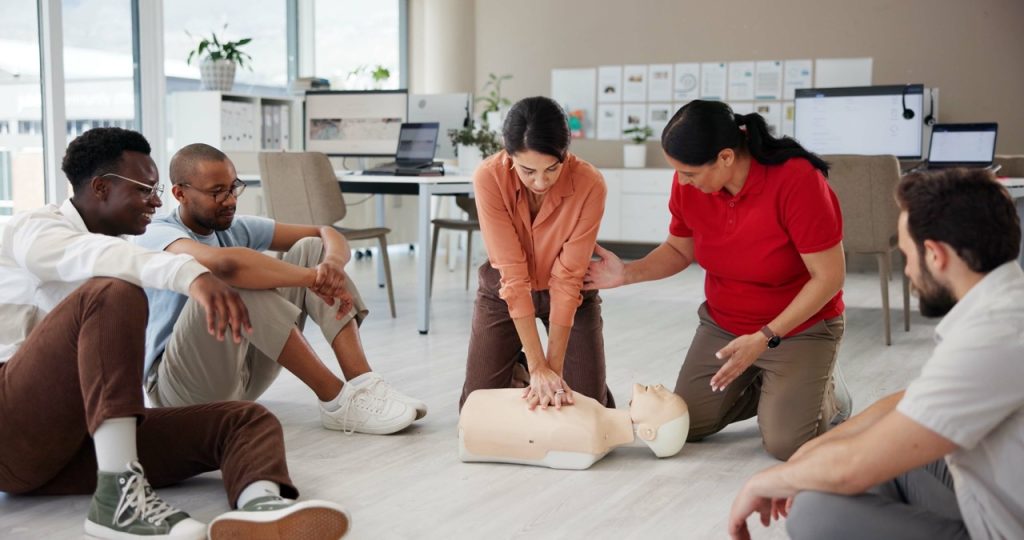
 

Filed Under: CPR, News Tagged With: American Heart Association, CPR, CPR Certification, CPR course, CPR training, healthcare professionals, HeartCertCPR

How Technology is Changing CPR Training

4 weeks ago by tims

Today’s technology is transforming CPR training by making it more accessible, more accurate, more realistic, and easier to complete, whether online, onsite, or a combined training format. New tools like smart training manikins, virtual training kiosks, and ongoing learning are helping students learn CPR faster and retain their skills longer. At HeartCert, we’re committed to staying innovative and incorporating the latest technology into our training programs. Keep reading to see how these advancements are transforming CPR training for the better.

The Top Ways Technology Is Transforming CPR Training

image of online CPR certification course on a digital screen with video playing

Online CPR Courses Make Learning More Flexible


Online CPR courses are not necessarily new technology, but they are the original innovation that paved the way for more advanced modalities. Online CPR courses are ideal for busy individuals because they often offer self-paced learning and make renewals easy. They can also be great for busy healthcare professionals and workplace teams who just need a refresher for recertification purposes.

However, some online CPR courses can leave some individuals feeling not completely equipped, which is why HeartCert takes it to a new level with smart manikins.

Smart Manikins Provide Real-Time Feedback

Other tech that is changing CPR training is the use of smart manikins, which are a transformative tool in providing real-time feedback to learners. By accurately tracking student techniques like hand placement, compression depth, recoil, and rhythm, smart manikins help improve both pass rates and skill accuracy when learning CPR. Smart manikins can be used in various training formats and can be effective components for both in-person sessions and blended learning environments. At HeartCert, we use smart manikins in several of our courses to ensure that trainees receive the guidance they need to enhance their skills confidently and competently.

CPR Training Kiosks Increase Public Access

CPR training kiosks are growing in popularity and are starting to appear in community centers, educational facilities, airports, shopping malls and more. CPR kiosks are changing the landscape of CPR training, making hands-only CPR a quick, effective process that makes certification and recertification easier than ever before.

At HeartCert, we are proud to have been an early adopter of some of the most innovative CPR training technology: easy-to-use, instructor-free CPR learning stations. Our CPR training kiosks combine online learning with hands-on practice, making CPR training accessible and allowing individuals to receive excellent training with ultimate scheduling flexibility. These training machines allow trainees to practice their skills on smart manikins and receive real-time feedback on their abilities.

Learn more about How HeartCert’s Self-Service Kiosk Makes CPR Certification Easy and Flexible

Emergency Simulations to Enhance Real-World Preparedness

Some emergency response trainings take hands-on practice to the next level. More and more organizations are offering simulations and realistic emergency scenarios for individuals and professionals to test their skills in a mock environment, leading to a boost in confidence and decision-making capabilities for greater success when a true emergency arises.

CPR & AED Practice to Reinforce Skills After Class

Obtaining your CPR and First Aid certification is just the first step; staying prepared to respond in the case of a medical emergency requires ongoing practice and skill-building. With technology, access to tools like refresher videos and online courses makes it easier to stay familiar with life-saving skills and equipped to use them in the event of an emergency. Regularly reviewing these materials can help keep you prepared and ensure that your skills are up to date.

Technology Improving CPR Outside the Classroom

Mechanical Chest Compression Devices Support First Responders

In recent years, advances in emergency medical technology have been transforming the way first responders deliver care. One notable change is the increasing use of mechanical chest compression devices among EMS teams and fire departments, which is making a significant impact on saving lives during cardiac emergencies. These devices are designed to provide steady, reliable compressions when manual CPR is hard to maintain, especially during transport or longer resuscitation efforts.

In fact, one Alabama fire department credits quick action, strong protocols, and this type of technology for helping them reach a 60% cardiac arrest survival rate, which is triple the national average of roughly 20%. Find out more about it here.

AED Technology Is Becoming Smarter

Automated External Defibrillator (AED) technology is another area that is evolving rapidly and devices are becoming smarter and more efficient.

The latest AED devices provide:

  • Faster analysis capabilities
  • Clearer prompts for users
  • Cloud-connected maintenance alerts

These advanced features help operators use the device effectively and easily, while minimizing confusion or errors during critical moments.

HeartCert not only provides training on how to use AEDs but is also a trusted distributor of the leading brands. Every household and workplace should have an AED. These life-saving devices are affordable, easy to use, and dramatically increase survival rates in the event of sudden cardiac arrest.

Get your AED here


FAQs on CPR Training & Technology

Q: Is online CPR training legitimate?

Yes, online CPR courses are recognized when paired with a hands-on skills test to ensure proper technique and certification standards are met.

Q: Can kiosks replace full CPR courses?

Yes, CPR kiosks combined with online learning can provide full CPR training and certification and are a great way to practice hands-on skills with smart technology.

Q: Are smart manikins more effective than traditional ones?

Yes, smart manikins provide real-time feedback on things like compression depth, rate, and hand placement, which helps learners improve accuracy and retain proper technique longer.

Q: Is technology making CPR easier to learn?

Absolutely. Online courses, smart manikins, apps, and kiosks provide flexible, interactive, and realistic training, making it easier for students to master and retain life-saving skills.

Innovations in Lifesaving Education: What Sets HeartCert Apart

Get CPR Certified With HeartCert

CPR training is more flexible than ever, and at HeartCert, we give you options that fit your busy schedule and preferred learning style. Choose from online, in-person, or hybrid classes, all led by certified instructors who keep training practical and easy to follow.

We use modern equipment and tools like smart manikins and kiosk training stations to give you real-time feedback as you learn and practice your life-saving skills. We also offer group and onsite training for workplaces that need a convenient way to get everyone certified.

As new technology continues to grow, one thing stays the same: quality CPR training saves lives. And HeartCert is here to make it simple to get started.

Explore our CPR training options today and choose the right one for you.

Find A CPR Course

HeartCert is your trusted training partner for CPR, ACLS, PALS, EMR, First Aid, CNA, TMA, IV, EKG and more, throughout the United States.

Courses include CPR/AED/First Aid, Basic Life Support (BLS), Advanced Cardiac Life Support (ACLS), Pediatric Advanced Life Support (PALS), Certified Nursing Assistant training, IV training, EKG training, babysitter basics and more. Courses and certifications from both the American Heart Association and American Red Cross are available. We offer virtual courses and certifications, in all 50 states as well as in-person classes at our headquarters, HeartCert CPR Eagan and major cities in Iowa, Illinois, Michigan, Minnesota, Missouri, Mississippi, Nebraska, Pennsylvania, Texas and Wisconsin.
 

Filed Under: News Tagged With: American Heart Association, CPR, CPR Certification, CPR course, CPR training, healthcare professionals, HeartCertCPR

HeartCert CPR Training Now Offered in Liberty, MO

6 months ago by tims

At HeartCert, we are dedicated to providing top-notch CPR and First Aid training programs, both at a basic and advanced level. We offer comprehensive courses that teach essential life-saving skills and instill confidence in individuals to effectively handle emergency situations. 

HeartCert’s Renowned Training Now Available in Missouri

HeartCert is pleased to announce the opening of our newest location in Missouri. Our renowned CPR training courses will be offered in Liberty, MO, about a 20-minute drive from Kansas City, Missouri.

At this location, we are currently offering our Red Cross Lay Responder Adult and Pediatric CPR/AED/First Aid-Blended Course. This CPR training course blends online information with instructor-led hands-on classroom time for a comprehensive and well-rounded training experience.

On-site training sessions will be held at 421 N State Rte 291, Liberty, MO 64068 (Best Western). 

If you are not in the Liberty, Missouri, area but looking to obtain your CPR certification, we also provide fully online and on-site courses and training sessions in various cities throughout the country.

Find a HeartCert Training Center Near You


Why Become CPR Certified?

First and foremost, being certified in performing CPR is known to save lives. In fact, according to a recent study, people who received bystander CPR had nearly a 30% increased chance of survival compared to those who did not receive the life-saving technique.

Additionally, data shows that over 70% of cardiac arrests happen in the home. As a result, the heart you could be saving maybe someone close to your own heart. CPR certification is easy to obtain; there is really no excuse not to.

Find Out How Often Should I Renew My CPR Certification?


Get CPR Certified with HeartCert

At HeartCert, we aim to make the process of obtaining and renewing your CPR certification as simple as possible. Our American Red Cross-approved training programs are designed to fit your busy schedule and are offered in a variety of formats, including in-person classes, online courses, and blended options. Our goal is to provide flexible options so that you can find a training method that works best for you, allowing you to gain the essential skills and knowledge needed to respond effectively in emergencies.

Our skilled and experienced CPR instructors are also available for on-site CPR training courses. If you have a group of employees or team members who want or need to be certified in CPR, first aid, or AED use, contact HeartCert to schedule your on-site training today.

Not near a HeartCert location? Sign up for a virtual CPR certification course!


HeartCert is your trusted training partner for CPR, ACLS, PALS, EMR, First Aid, CNA, IV, EKG and more, throughout the United States.

Courses include CPR/AED/First Aid, Basic Life Support (BLS), Advanced Cardiac Life Support (ACLS), Pediatric Advanced Life Support (PALS), Certified Nursing Assistant training, IV training, EKG training, babysitter basics and more. Courses and certifications from both the American Heart Association and American Red Cross are available.

We offer virtual courses and certifications, in all 50 states as well as in-person classes at our headquarters, HeartCert CPR Eagan and major cities in Iowa, Illinois, Georgia, Michigan, Minnesota, Mississippi, Nebraska, Pennsylvania, Texas and Wisconsin.

Filed Under: News Tagged With: CPR Certification, CPR course, CPR training, HeartCert CPR

The Difference between a BLS and a Heartsaver Course

7 months ago by bwadmin Leave a Comment

With so many CPR certification courses out there, it can be hard to figure out which one you need. Whether you’re signing yourself up for a course or organizing training for a group of people or team, there are a couple of things to consider: Why are you looking to take a CPR course? What level of skills are you looking to obtain?

Here at HeartCert, we offer various types of instruction that pertain to your needs and certifications. In this blog, we’ll break down the difference between BLS and Heartsaver courses, so you can make the right choice for your particular needs.

CPR instructor placing AED on training dummy during HeartSaver CPR course


What’s a BLS Course?

BLS (Basic Life Support) courses are the more technical training programs that last around four hours and teach healthcare providers and other medical professionals to respond in emergencies. Unlike your typical CPR class, the BLS course is designed to offer more advanced skills and is frequently used for these professions:

  • Nurses
  • Doctors
  • Hospital and clinic personnel
  • Dental assistants

The four-hour basic life support course trains you in recognizing and responding to various life-threatening emergencies. Throughout the duration of the BLS course, you will learn:

  • Rescuer CPR techniques 1 and 2
  • CPR for adults, children, and infants
  • Automated External Defibrillator (AED) utilization
  • Advanced choking relief techniques
  • And more

For more hands-on medical roles, American Heart Association courses like BLS cover the basics, plus more advanced tools to utilize in case of an emergency. Centered around real-world scenarios, the training is both practical and applicable for health professionals.

What’s a Heartsaver Course?

Heartsaver First Aid and CPR (cardiopulmonary resuscitation) is ideal for non-medical professionals who need the training for their job or for anyone interested in learning how to respond in emergencies. Whether you’re working at a daycare, school, or simply want to have the information on hand if you need it, the Heartsaver CPR training options are an easy way to learn the essential basics. In this course, you’ll learn to:

  • Complete basic first aid
  • Utilize CPR
  • Offer AED assistance
  • Recognize cardiac arrest
  • Provide help until EMS arrives

The Heartsaver course is perfect for individuals who have little to no medical training but want the life-saving tools in their arsenal just in case heart situations occur. 

What Other Courses Does HeartCert Offer?

HeartCert has an array of CPR courses and First Aid certification classes to ensure you and your group or team get the right educational tools. Some of our other programs include:

  • CNA training
  • IV training
  • EKG training
  • Advanced Cardiac Life Support (ACLS)
  • Pediatric care

Curious about our other CPR classes?

Explore CPR Certification Courses

Is a BLS or Heartsaver Course the Best Option?

The bottom line: Answering the question, “Which CPR course do I need?” and determining whether the BLS or Heartsaver course is right for you depends on your role, requirements, and goals. If you’re in a medical role, chances are that the BLS is the best course to progress with. If you’re in a less healthcare-dominated field, the Heartsaver course is a great option to learn basic care without all the advanced information.

Find a BLS or Heartsaver Course Location Near You

HeartCert makes it easy to find quality, affordable training for BLS and Heartsaver courses with online and in-person classes. Determine which course best fits your needs and certifications, and connect with us to sign up at a location near you. Our certified trainers provide proper instruction and real-life scenarios to ensure the information makes an impact. Whether you need solo instruction at one of our locations or an on-site group training event, reach out today to get started.

This is an updated blog that was originally published in 2016.


HeartCert is your trusted training partner for CPR, ACLS, PALS, EMR, First Aid, CNA, IV, EKG and more, throughout the United States.

Courses include CPR/AED/First Aid, Basic Life Support (BLS), Advanced Cardiac Life Support (ACLS), Pediatric Advanced Life Support (PALS), Certified Nursing Assistant training, IV training, EKG training, babysitter basics and more. Courses and certifications from both the American Heart Association and American Red Cross are available.

We offer virtual courses and certifications, in all 50 states as well as in-person classes at our headquarters, HeartCert CPR Eagan and major cities in Iowa, Illinois, Georgia, Michigan, Minnesota, Mississippi, Nebraska, Pennsylvania, Texas and Wisconsin.

Filed Under: News Tagged With: BLS, CPR, CPR course, CPR training, First Aid, first aid course, first aid training, group training, HeartCertCPR, Heartsaver, on-site training

Virtual CPR Training for Busy Professionals and Parents

11 months ago by tims

Checking things off your to-do list can be a struggle in today’s fast-paced world, but there are some things you really shouldn’t put off. Obtaining or renewing your CPR certification is one of those things. You never know when you may find yourself in an emergency situation and need to administer the life-saving skills learned in CPR and first aid training. At HeartCert, we are on a mission to make CPR and other advanced training as accessible as possible, and virtual CPR is one way to do just that. 

online CPR training class on a tablet screen

Why Virtual CPR Training is a Game-Changer

Virtual or online CPR training makes it faster and easier than ever for busy professionals or parents to find time in their busy schedules to learn the ever-important skill of CPR. With online CPR training, you can get your CPR certification anywhere and anytime, making it ideal for professionals with demanding schedules and a flexible option for parents balancing work and family.

What to Expect from Online CPR Training

How Online CPR Courses Work

Some individuals may be concerned that virtual CPR training is not as informative or effective as in-person training may be. However, research has shown that online CPR courses are just as effective as traditional classes. This study compared in-person instructor-led CPR courses with online computer-based courses. The results showed that both groups performed similarly in CPR skills assessments, demonstrating that online learning is just as effective as face-to-face instruction.

Not only did the study show comparable results among the two groups of participants, but online CPR training can be a solution for more individuals becoming CPR certified as it often eliminates roadblocks due to scheduling conflicts, time constraints, and hesitation of participation due to learner discomfort of performing procedures in groups settings.

Source: Performance outcomes of an online first aid and CPR course

Online CPR trainings can vary in how they are operate; some are self-paced modules whereas others are live instructor-led sessions. They often utilize interactive videos, quizzes, and even hands-on practice options using mannequins shipped directly to you. 


Who Benefits Most from Virtual CPR Training?

busy parent making breakfast for three children

Of course, anyone can benefit from the information and skills gained from virtual CPR training, but certain individuals will find the convenience especially helpful.

This includes: 

  • Parents and caregivers who want to be prepared for emergencies
  • Workplace teams required to maintain CPR training
  • Healthcare professionals needing certification or renewal

How to Choose the Right CPR Training Program

Not all online CPR trainings are created equal. When comparing your options and selecting the right CPR training program, we suggest reading testimonials and customer reviews to get an idea of previous student satisfaction with the online training. Check the training programs you are considering for American Heart Association (AHA) or Red Cross-approved certifications. Even though you are taking online training, having adequate customer service as needed and instructor support if questions arise is another important factor. Lastly, confirm that the online training is accessible on your device; for example, if you only have a tablet or mobile phone available, ensure the training will work on these devices. 

CPR Training Your Way with HeartCert

At HeartCert, our lifesaving education trainings are designed to be accessible and flexible. No matter your schedule, preference and learning style, we have CPR training designed with you in mind. From in-person training at one of our physical locations to online certification for greater flexibility, you can choose which option is best for you. At HeartCert, we recognize the power of innovation and technology, which is why we also offer hybrid training that blends the best components of online and in-person training. With our innovative Kiosk technology, you get to enjoy the convenience of a program that accommodates any schedule with the hands-on experience of an in-person class.

When it comes to busy parents and professionals, online CPR training can be an ideal option as it offers the flexibility they need to learn lifesaving skills at their own pace without disrupting their busy schedules. Explore our American Red Cross CPR training options today and choose the option that is best for you.

Sign Up For CPR Training Today


HeartCert has options for everyone: blended online/in-person courses, fully online and private Kiosk sessions at several HeartCert locations.


HeartCert is your trusted training partner for CPR, ACLS, PALS, EMR, First Aid, CNA, IV, EKG and more, throughout the United States.

Courses include CPR/AED/First Aid, Basic Life Support (BLS), Advanced Cardiac Life Support (ACLS), Pediatric Advanced Life Support (PALS), Certified Nursing Assistant training, IV training, EKG training, babysitter basics and more. Courses and certifications from both the American Heart Association and American Red Cross are available. We offer virtual courses and certifications, in all 50 states as well as in-person classes at our headquarters, HeartCert CPR Eagan and major cities in Iowa, Illinois, Georgia, Michigan, Minnesota, Mississippi, Nebraska, Pennsylvania, Texas and Wisconsin.

Filed Under: News Tagged With: American Heart Association, CPR, CPR Certification, CPR course, CPR training, HeartCert, HeartCert CPR

Heart Health Basics Everyone Should Know

11 months ago by tims

We might not give it that much thought, but each and every day, your heart is constantly at work pumping oxygen and nutrients to keep you alive and thriving. But with heart disease being the leading cause of death worldwide, taking care of your heart isn’t just for certain ages or lifestyles; prioritizing heart health is something everyone should consider.

According to the CDC, in the U.S., a heart attack happens every 40 seconds. Even more alarming, someone dies from heart disease every 33 seconds. The reality of these statistics is difficult to swallow, but they highlight why understanding the basics of heart health is so important. The good news? It’s easy to start making small, simple changes that can have a big impact on your heart’s health and overall well-being.

In this article, we’ll cover essential tips for heart health to help you take proactive steps toward a stronger, healthier heart.

Understand the Key Risk Factors of Heart Disease

How do you know if you are at risk for heart disease? As described by OASH, anyone can develop heart disease, but you’re at higher risk if you:

  • Have high cholesterol, blood pressure, or diabetes
  • You are a smoker, or are overweight
  • Live a sedentary lifestyle or lack of a healthy diet
  • Had preeclampsia during pregnancy

Your age and family history also play a role. With age, your risk increases, and having an immediate family member with a history of heart disease also increases your risk.

Related: Know Heart Attack Symptoms and How They Differ in Women and Men


Everyday Habits for a Healthy Heart

There are many steps you can take to help prevent heart disease. Here’s a list of actions you can start today to improve your heart health.

Eat a Heart-Healthy Diet

Making even small changes to your diet can have an impact on your heart health. A few you can start with are lowering your salt intake, swapping the soda for sparkling water, and the drive-thru breakfast for one of these heart-healthy breakfast options.

Top Ten Tips for Choosing Heart-Healthy Snacks

Get Moving and Stay Active 

Moving your body is just as important as what you eat. If you can’t find the time or energy for a lengthy gym workout, that’s okay—even starting with 10–20 minutes of physical activity can make a difference in your health. Increasing your daily step count is a great way to get moving, and challenging yourself can help keep you motivated.

6 Low-Impact Cardio Workouts for Heart Health

Consume Alcohol in Moderation

Excessive alcohol consumption is known to increase the risk of heart disease and contribute to other health issues, including liver disease and high blood pressure. If you feel pressured to drink in social settings, opt for a mocktail instead; this way, you can enjoy the occasion while prioritizing your health.

How Alcohol Impacts Heart Health

Quit Smoking

If you’ve taken up smoking, quitting is one of the most impactful steps you can take for your heart and overall health. Avoiding secondhand smoke is just as important for protecting your health.

How Cigarettes and Vapes Affect Heart Health

Get Enough Sleep

In today’s era of constant multitasking and heavy technology use, basic human needs, like getting enough sleep, are often overlooked. However, snoozing for 7–9 hours each night is essential for our bodies to recharge, maintain overall health, and support a healthy heart.

Find Out How Irregular Sleep Affects Heart Health

Manage Stress in Your Life

With the demands of today’s fast-paced world, it doesn’t take much before stress creeps into your life. Make sure you practice healthy boundaries at work and in your relationships. Try using stress management techniques such as yoga, breathwork and time outdoors. 

Find Out How Stress Impact Heart Health

Be Proactive in Your Health

Stay in control of your cholesterol, blood glucose (sugar), and blood pressure by meeting with your doctor for regular check-ups. Scheduling preventive screenings can also help you stay aware of any potential health concerns before they become bigger issues.

Why Knowing CPR Can Save Lives

You can sign up for CPR certification renewal classes here at HeartCert. We offer accredited CPR renewal classes that are up to date with the newest education and emergency situation tactics. If you need to renew your certifications today, click below to register for an upcoming class to ensure your certification stays current.

Register Today


HeartCert has options for everyone: blended online/in-person courses, fully online and private Kiosk sessions at several HeartCert locations.


HeartCert is your trusted training partner for CPR, ACLS, PALS, EMR, First Aid, CNA, IV, EKG and more, throughout the United States.

Courses include CPR/AED/First Aid, Basic Life Support (BLS), Advanced Cardiac Life Support (ACLS), Pediatric Advanced Life Support (PALS), Certified Nursing Assistant training, IV training, EKG training, babysitter basics and more. Courses and certifications from both the American Heart Association and American Red Cross are available. We offer virtual courses and certifications, in all 50 states as well as in-person classes at our headquarters, HeartCert CPR Eagan and major cities in Iowa, Illinois, Georgia, Michigan, Minnesota, Mississippi, Nebraska, Pennsylvania, Texas and Wisconsin.
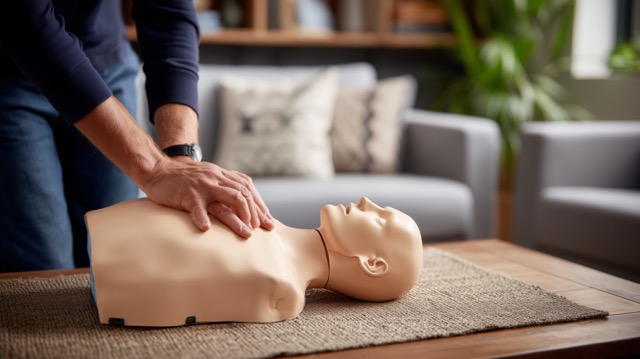
Filed Under: News Tagged With: American Heart Association, CPR, CPR Certification, CPR course, CPR training, heart health, HeartCert, HeartCert CPR, lifestyle

  • Page 1
  • Page 2
  • Page 3
  • Interim pages omitted …
  • Page 10
  • Go to Next Page »

Footer

logo-transparent

4460 Erin Dr.
Eagan, MN 55122

651-261-2314
info@HeartCertCPR.com
HeartCertCPR.com

  • Facebook
  • LinkedIn
  • Twitter
  • YouTube

Resources

  • Join Our Team
  • AED Purchases
  • FAQs
  • Replacement Cards
  • Rescheduling Fee

Stay in Touch

  • This field is for validation purposes and should be left unchanged.

Copyright © 2026 HeartCert | EEO/AA Employer | All Rights Reserved | Privacy Policy | Terms of Use | Minneapolis Web Design by BizzyWeb | Log in